
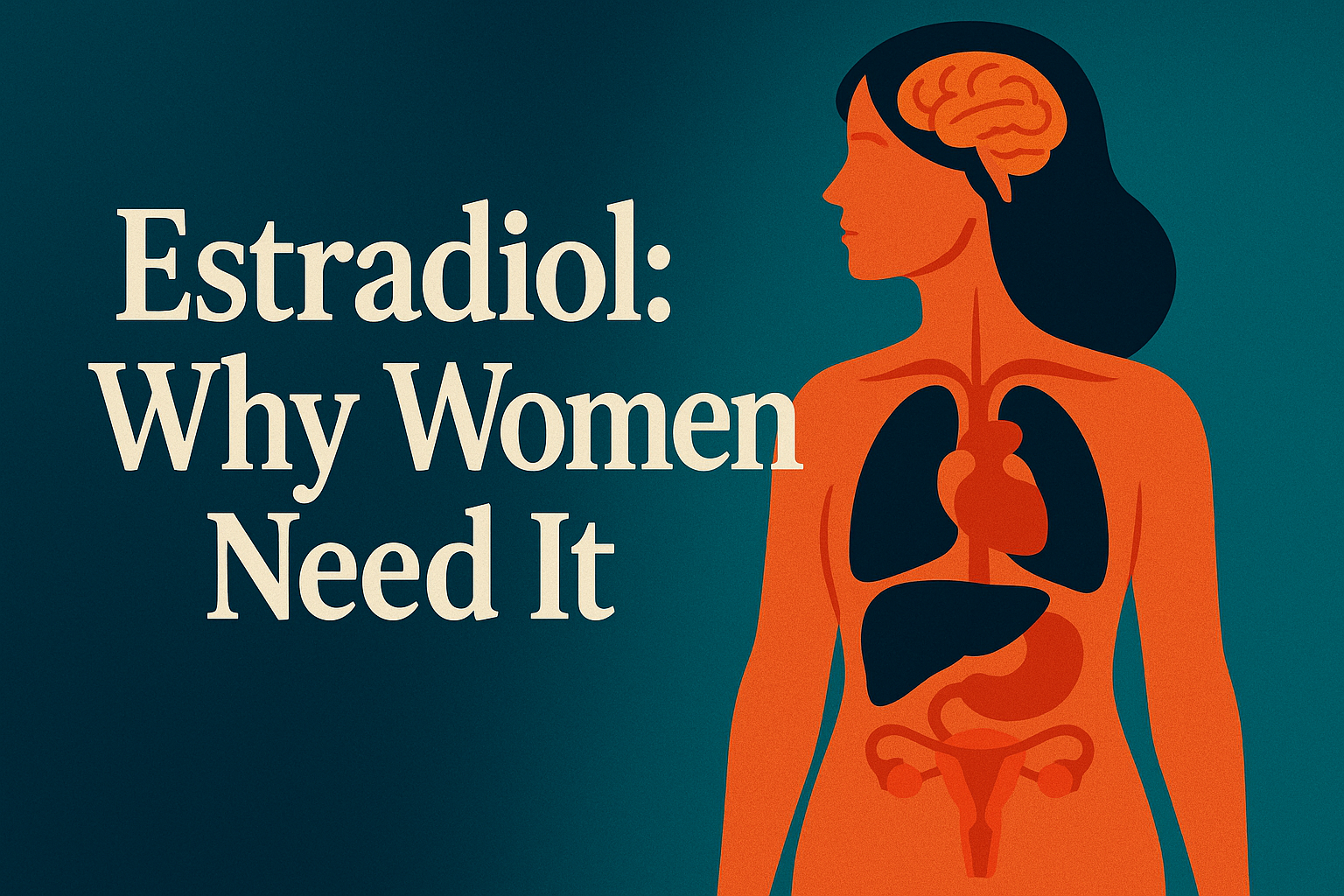
Estradiol: Why Women Need It Especially as We Age or After Hysterectomy
Hormones are the body’s internal communication system. They influence how we think, feel, sleep, age, metabolize food, and respond to stress. Among women, estradiol, the most biologically active form of estrogen, is one of the most important hormones for emotional, physical, and metabolic health. Yet it is also one of the hormones most commonly lost with age, surgical procedures, and modern stress.
Many women grow up hearing that estrogen is only important for reproductive years, but that could not be further from the truth. Estradiol plays a critical role far beyond menstruation and fertility. It protects the brain, heart, bones, metabolism, mood, and overall quality of life. When levels fall, whether naturally through menopause or abruptly with a hysterectomy, the impact can be profound.
This article explains what estradiol does, why women need it at every stage of life, and why hormone replacement can be important during perimenopause, menopause, and after hysterectomy.
What Is Estradiol?
Estradiol (E2) is the strongest of the three major estrogens in the body:
Estradiol (E2) – The primary hormone during reproductive years and the most powerful.
Estrone (E1) – Weaker; predominates after menopause.
Estriol (E3) – The weakest; increases during pregnancy.
Estradiol binds to estrogen receptors located in almost every tissue of the body—brain, bones, skin, heart, bladder, vaginal tissue, and even the microbiome. This widespread influence explains why declining levels can create symptoms from head to toe.
Estradiol’s Role Throughout a Woman’s Life
1. Brain and Cognitive Health
Estradiol helps regulate:
Memory
Focus and concentration
Mood stability
Neuroplasticity
Serotonin and dopamine pathways
Declining estradiol is associated with:
Anxiety
Depression
Irritability
“Brain fog”
Difficulty with word recall
Increased risk of dementia with long-term deficiency
Women often describe these symptoms as “feeling unlike myself.” Restoring healthy estradiol levels often brings mental clarity and emotional stability back.
2. Bone Strength and Density
Estradiol prevents bone loss by regulating osteoclast and osteoblast activity. After menopause, bone density drops rapidly, increasing risk for:
Osteopenia
Osteoporosis
Fragility fractures
Women who lose estradiol abruptly, such as after hysterectomy or oophorectomy, experience even faster bone loss. Estradiol therapy is one of the most effective evidence-based ways to protect bone health long-term.
3. Cardiovascular Protection
Estradiol plays a powerful anti-inflammatory and cardioprotective role:
Supports healthy cholesterol ratios
Maintains flexibility of arteries
Reduces plaque formation
Improves blood flow
After menopause, a woman’s risk of heart disease sharply increases. Hormone therapy, especially when started early, can help maintain vascular health.
4. Metabolism and Weight Regulation
Estradiol affects:
Insulin sensitivity
Fat distribution
Appetite regulation
Muscle mass maintenance
Thyroid function
When estradiol declines, many women notice:
Slower metabolism
Blood sugar fluctuation
Difficulty losing weight
Muscle loss despite exercise
Balanced estradiol can support a healthier metabolic profile.
5. Vaginal, Bladder, and Pelvic Floor Health
Estradiol is essential for:
Vaginal lubrication
Elasticity
Tissue thickness
pH balance
Microbiome protection
Urethral support
Low estradiol commonly causes:
Painful intercourse
Recurrent UTIs
Urinary urgency
Vaginal dryness and tearing
Burning or irritation
Pelvic floor weakness
These issues do not improve with time; they worsen without treatment. Estradiol therapy—systemic or local—can dramatically improve these symptoms.
6. Skin, Hair, and Collagen
Estradiol influences collagen production and elasticity, helping maintain:
Firmness
Hydration
Wound healing
Hair density
Declining estrogen accelerates thinning, dryness, wrinkling, and loss of elasticity.
Why Estradiol Drops as Women Age
Perimenopause
This transitional period—often beginning in the 30s or 40s—is marked by irregular hormone fluctuations. Estradiol rises and falls unpredictably, leading to:
Mood swings
Night sweats
Irregular cycles
PMS-like symptoms
Weight changes
Sleep disruption
Symptoms often appear years before a woman stops having periods.
Menopause
Menopause is officially defined as 12 months without a menstrual cycle. Estradiol production drops dramatically and remains low for life. This is when many symptoms intensify:
Hot flashes
Low libido
Vaginal dryness
Weight gain
Anxiety
Joint pain
Brain fog
Without intervention, the deficiency continues to affect long-term health.
Estradiol After Hysterectomy: Why the Need Can Be Even Greater
A hysterectomy can involve:
Removal of the uterus only (uterine hysterectomy)
Removal of the uterus + ovaries (oophorectomy)
Removal of the uterus, ovaries, and fallopian tubes
Even if the ovaries remain, their function often declines more rapidly, leading to earlier estrogen loss.
If the ovaries are removed
Estradiol levels drop to nearly zero within days. This is known as surgical menopause, and symptoms can be immediate and severe:
Intense hot flashes
Night sweats
Rapid bone loss
Vaginal dryness
Emotional changes
Fatigue
Weight gain
Insomnia
Estradiol replacement is often recommended to protect long-term health unless contraindicated.
If the ovaries are left intact
Studies show that up to 60% of women experience ovarian failure within a few years due to disrupted blood supply. Symptoms may develop earlier than expected.
Benefits of Estradiol Therapy
Estradiol replacement, when personalized and medically supervised, can:
Reduce hot flashes and night sweats
Improve mood, sleep, and cognition
Protect bone density
Support cardiovascular health
Improve vaginal lubrication and sexual comfort
Reduce urinary symptoms
Support metabolism and weight control
Restore quality of life
The earlier therapy is started—ideally within 10 years of menopause—the greater the protective benefits.
Common Myths About Estradiol
Myth 1: “Estrogen causes breast cancer.”
The largest long-term studies, including WHI follow-ups and newer data, show:
Bioidentical estradiol, especially when combined with micronized progesterone when needed, does not increase breast cancer risk for most women.
Women who had a hysterectomy and take estrogen alone actually had lower breast cancer rates in research trials.
Myth 2: “You don’t need hormones after your period stops.”
Estradiol is crucial to whole-body health. Menopause doesn’t eliminate its importance.
Myth 3: “Symptoms are just part of aging.”
Symptoms are caused by hormone decline, not aging itself. Restoring balance can be life-changing.
Who May Benefit From Estradiol Replacement?
Women in perimenopause
Women in menopause
Women after hysterectomy
Women with premature ovarian failure
Women with significant symptoms affecting daily life
A comprehensive evaluation—including bloodwork, medical history, and symptom review—helps determine the best approach.
Conclusion
Estradiol is not just a “reproductive hormone.” It is a foundational hormone that affects every major system in a woman’s body. As women age, or when they undergo hysterectomy, estradiol naturally declines, often leading to symptoms that can dramatically reduce quality of life. Beyond symptoms, long-term deficiency increases the risk of heart disease, bone loss, cognitive decline, and metabolic problems.
Personalized estradiol therapy can restore balance, improve quality of life, and support long-term health and vitality. When prescribed by a knowledgeable provider and monitored appropriately, it is one of the most effective tools available to support women through midlife and beyond.